
What makes Casino Mobile Apps Operate in Practice
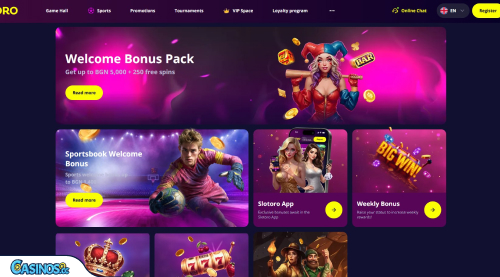
When we first delve into mobile gaming in Lithuania, the behind-the-scenes wizardry behind a seemingly effortless tap on the screen can feel almost invisible slotoro-kazino.lt. Yet grasping how these applications function is essential for every user who wants to engage with confidence. At Slotoro Casino, we believe transparency builds trust, which is why we want to demystify the functional backbone of a contemporary casino mobile app. These are not just scaled-down websites; they are complex pieces of software designed to deliver high-definition graphics, secure payment gateways, and real-time random number generation directly to your palm. The smooth experience you enjoy on a device in Vilnius or Kaunas depends on a complex architecture that manages local device processing with powerful remote servers, guaranteeing every spin of the slot machine is fair, immediate, and visually stunning.
Web Architectures Explained
To comprehend how your top https://www.similarweb.com/app/google-play/com.kamagames.blackjack/statistics/ games run so smoothly, we must first differentiate between the three primary types of mobile applications: native, web-based, and hybrid. A native app is built exclusively for a certain operating system, such as iOS or Android, using platform-specific programming languages like Swift or Kotlin. This allows the software to connect directly with your device’s hardware, providing outstanding performance and fluid animations. A web app, by contrast, runs through a browser, functioning as a adaptive website that resembles an application icon on your home screen. While handy, web apps often have difficulty with complex visual effects. The hybrid model, which we commonly utilize at Slotoro Casino for our platform, bridges these two worlds by enclosing a web application inside a native container, allowing us deliver a coherent, app-like experience while preserving a lightweight footprint.
Why Combined Technology Dominates in the Gaming Space
The preference for hybrid frameworks in the iGaming industry is a strategic move motivated by the need for rapid updates and widespread compatibility. Gaming platforms change constantly, with new slot titles and security patches released weekly. A completely native app would demand users in Lithuania to download a large update from the App Store or Google Play every time a minor fix is implemented. By using hybrid technology, we can modify the logical core and game library on our servers instantly, while the native shell simply shows the new content. This indicates you will never be locked out of a new release pending a download. This architecture also guarantees that whether you are using a Samsung tablet in Klaipėda or a Xiaomi phone, the interface conforms perfectly, delivering identical odds, mechanics, and clarity without the fragmentation issues that plague purely native development.
Hardware Compatibility and Performance Optimization
A significant advantage of the existing technological landscape is the opportunity afforded to a wide spectrum of hardware. We engineer the application to function smoothly on entry-level devices that possess at least 2GB of RAM, while simultaneously adjusting to use the 120Hz refresh rates of flagship phones for ultra-smooth scrolling. This is managed through adaptive resource allocation where the graphical fidelity of games is modified in real-time based on the device’s thermal headroom and processing power. It implies an older tablet will not crash when loading a modern video slot; it will simply show fewer particle effects, keeping a stable frame rate. For the Lithuanian market, where a diverse range of Android devices leads, we constantly assess performance against popular local handset models to eliminate latency, guaranteeing that touch responsiveness is sharp and immediate regardless of the price point of your hardware.
Power and Bandwidth Management
We are very aware that an application draining your battery or using excessive mobile data creates a negative user experience. To counter this, we incorporate advanced caching mechanisms that store game assets like symbols, backgrounds, and sound files locally after the first launch. This suggests you are not re-downloading 50 megabytes of data every time you open a favorite slot machine; the app only transfers minuscule text strings containing the game results with the server. Consequently, a standard one-hour session on a 4G connection in Lithuania might consume less data than browsing social media. Regarding battery life, we restrict background processing and turn off non-essential animations when a device enters low-power mode. Our goal is to improve the software so that a gaming break does not require carrying a charger, letting you play comfortably knowing your resources are being conserved.
Downloading and Installing the Platform for Lithuania
The setup process for a licensed gaming platform in Lithuania varies slightly from standard commercial apps, mainly due to security protocols and local jurisdictional requirements. You will seldom find a real-money gambling application pre-listed on the traditional Google Play Store because of policy restrictions; instead, the distribution model is based on a direct download, often known as an APK for Android. When you navigate to the Slotoro Casino platform, you are led to a secure, dedicated portal where the installation file is hosted. Your device will likely ask you to approve installations from “unknown sources.” Do not be alarmed by this phrasing; it is the standard Android terminology for any software not downloaded from the official store but checked by the operator. This step enables us ensure the link remains direct and untainted by third-party intermediaries.
Sequential Setup for Android Devices
Once you have located the verified download link for the Android package, a specific sequence of actions secures a clean setup. Follow these steps carefully:
- Access your device’s security settings and enable the option to allow installations from your browser or file manager.
- Get the authenticated .apk file exclusively from the operator’s official link to avoid manipulated versions.
- Access the downloaded file and grant the necessary permissions for storage and location, which facilitate regulatory anti-fraud checks and auxiliary functions.
- Follow the installation wizard; the Slotoro Casino icon will appear on your home screen within seconds, prepared for use.
Smooth Integration on iOS Devices
The Apple ecosystem delivers a marginally smoother route due to the rigorous security model of iOS, though the process remains distinct from standard apps. For iPhones and iPads used in Lithuania, we typically use Progressive Web App technology or an enterprise-signed application that avoids the need for a public App Store listing. This entails a direct configuration profile or an “Add to Home Screen” prompt that creates a full-screen bookmark with an app-like experience. This method is entirely safe and sandboxed by Apple’s own WebKit engine. Once you install the shortcut, the platform will feel indistinguishable from a native app, complete with push notification capabilities and face-ID login implementation. This guarantees that your biometric data is used only for local authentication, maintaining your identity encrypted on your device and aligning perfectly with the confidentiality expectations of a modern user.
Regulatory Developments
Financial safety is the cornerstone of our professional advisory. A properly operating gaming app functions as a protected vault, using numerous layers of encryption that extend far beyond a standard password. When you start a cash movement from a Lithuania-based bank account or an e-wallet, the app sets up a tunnel using Transport Layer Security, commonly the modern 1.3 protocol. This assures that sensitive financial credentials are hashed and segmented before they exit your device. Beyond encryption, we incorporate a method called tokenization, where your genuine card details are swapped with a temporary identifier, leaving data unusable to potential interceptors. This sophisticated infrastructure assures that while a game may start in milliseconds, the payment handshake between your phone and the payment gateway is reinforced against intrusion, giving you peace of mind to focus entirely on the entertainment.
Two-Factor Authentication and Biometric Locks

Cutting-edge mobile security transcends alphanumeric combinations, and we have fully adopted biometric capabilities to safeguard your account at Slotoro Casino. By leveraging the native fingerprint scanners or facial recognition hardware embedded into your smartphone, we add a physiological lock that cannot be cracked. Two-factor authentication provides a crucial additional checkpoint; even if a login credential is compromised, a dynamic single-use code produced by an authenticator app is required for entry. This is particularly relevant for players who often move between mobile data and public WiFi networks. We advise always turning on these biometric locks, as they directly bind your identity to the account without keeping an actual image of your face or fingerprint, but rather a mathematical representation of it, making sure that privacy and security walk hand in hand.
Legal Compliance and App Updates
Operating a mobile gaming application in Lithuania requires strict observance of the regulatory requirements set forth by the Gaming Control Authority. The app functions as a terminal extension of the licensed operator, meaning every minor software update must adhere to fairness and security standards. When we push an update, it typically contains adjustments to the responsible gaming modules, such as the integration of mandatory breaks or reality checks that pop up on your screen to remind you of the session duration. These are not arbitrary features; they are embedded deeply into the app’s timer and logic engine. The technical architecture must support instant account freezes and self-exclusion locks that propagate across all devices linked to a single identity, ensuring that the responsible gaming tools available in Lithuania are essential functional components of the code, not just proposals.
Deciphering Game Logic and RNG Integration
The heart of any casino software lies in its Random Number Generator, a intricate algorithm that determines the outcome of every coinmarketcap.com virtual hand, spin, or dice throw. When you hit the spin button on a slot game within the app, the local client does not actually decide if you win; it simply transmits a seed request to a central server. The server computes this through a certified RNG engine that creates millions of unpredictable number sequences per second. This server-side authority blocks any manipulation of game results by a user’s device. We guarantee that the RNG systems powering our platform receive rigorous testing by independent auditing bodies, ensuring that the results in Lithuania retain the same statistical purity and unpredictability as those in any other jurisdiction. The visual pleasure of spinning reels is merely a graphical interpretation of this remote calculation, displayed via HTML5 on your screen.
The Function of Return to Player in Mobile Sessions
Return to Player, or RTP, is a statistical percentage that indicates how much a game pays back over millions of spins, and it works identically on a mobile app as it does on a desktop. A common misconception is that mobile platforms have lower payouts or changed odds; this is patently false in a regulated environment. The RTP is embedded into the game’s server-side logic, making the device you use completely irrelevant to the payout frequency. Whether you are enjoying a session on a 5G connection in Panevėžys or on WiFi at home, the mathematical model stays intact. We focus on displaying this data clearly, empowering you to make informed decisions based on volatility and theoretical return. To explain further, we tackle the most widespread myths directly:
- Mobile apps offer lower RTP than desktop. Untrue — the RTP is server-side and uniform across all platforms.
- Switching devices changes your odds. The mathematical model remains constant, regardless of hardware.
- Playing on a slower connection reduces payouts. Network speed only influences visual loading, not the outcome calculation.
Interface Design and Navigation Behavior
The layout of a casino app is a lesson in mental ergonomics. The placement of every button and navigation option is intentional, planned to be touchable by a finger
while holding the device in one hand. The thumb zone, the arc on the bottom part of the screen, contains the most important actions: reel buttons, bet adjusters, and the main lobby entry. We use touch feedback, that gentle vibration when a button is pressed successfully, to simulate the physical feeling of a real button. This completes the feedback loop and validates an input without requiring eye focus, reducing the chance of accidental double-taps. The color scheme is intentionally picked to lower eye strain during night sessions, with a dark mode that uses true blacks to turn off display elements on OLED screens, preserving power while rendering colorful game icons stand out with improved contrast and clearness in dim-light environments common in nighttime gaming.
Portrait vs. Landscape Gaming Modes
The display rotation within a single application provides two distinct design challenges that we have solved by developing distinct interface designs. Vertical mode is engineered for speed and easy scrolling, presenting game details in upright columns that enable quick swiping with a one finger. It is the ideal mode for navigating lobbies, checking balances, and enjoying modern slots designed specifically for portrait mode. Wide orientation, on the opposite side, triggers a immersive feel optimized for traditional table games and live casino streams, where a broader view is crucial for reading cards and watching the spin wheel. The transition between these modes must be immediate and smooth. We have improved the orientation handling so that the round status does not glitch or reset when you accidentally tilt your device, guaranteeing that even during a dealer blackjack game in Lithuania, the link stays strong and the screen fluid.
Live Dealer Broadcasting and Live Engagement
Perhaps the most challenging aspect of a contemporary casino app is the live casino, where ultra-clear video of a actual human dealer is streamed to your device with minimal delay. This is not a pre-recorded video but a interactive communication channel. The application uses dynamic bitrate streaming, which continuously evaluates your internet speed and adjusts the video quality on the fly to avoid buffering. When you make a wager on your screen, that data is sent via a low-latency protocol to the studio, where the dealer views the total bets on their terminal. We integrate optical character recognition technology into the stream, which translates the physical dealing of cards and spinning of the wheel into data that populates the user interface instantly. This blend of video and data overlay assures that even if a player in Alytus has a brief network fluctuation, the outcome data is captured server-side, and no wager is lost.
Optical Character Recognition and the UI
The critical connection between the actual felt table and your digital screen is mostly processed by Optical Character Recognition, or OCR. Advanced cameras record every detail of the game, and the OCR software immediately identifies each card drawn or number landed. This data is then transmitted as a compact digital signal to your mobile device, updating the history board and paying out bets without manual input. The tight synchronization means you can keep up with the game even if the video hiccups, because the textual data stream is far more robust than the video stream. We trust this technology to remove human error in payout calculations. Every event is recorded digitally, creating an indisputable record of the game flow, so you can trust that the interface matches the exact reality of the casino floor, without delay or misunderstanding.
